

Banner Breta Caceres
2.3 Organizational roles and responsibilities
Where you are ::
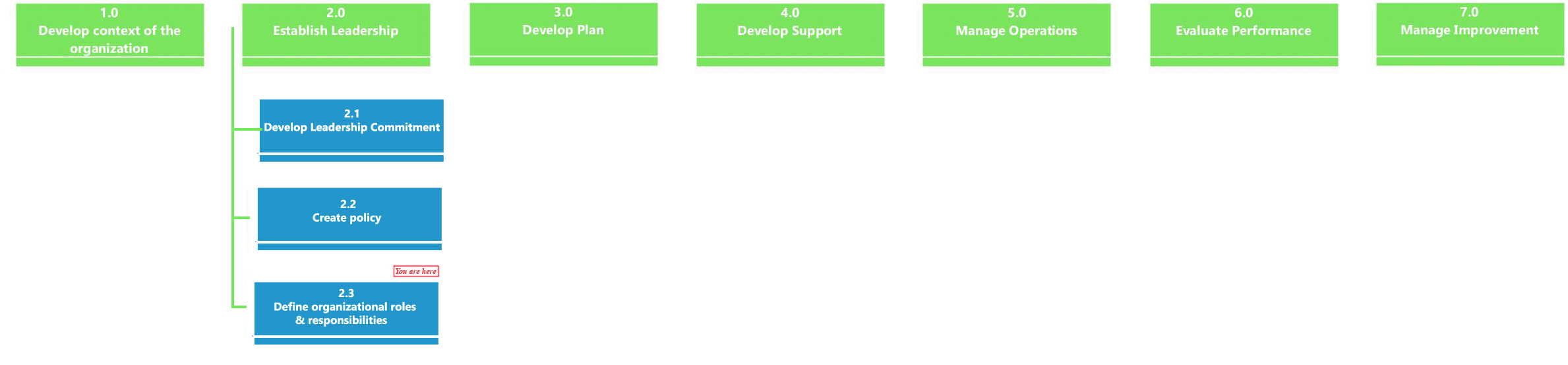
2.3 context diagram
From Commitment to Action: Leading a Responsible Business ::
You don’t have to be big to make a big difference.

Around the world, small businesses and entrepreneurs are demonstrating that responsible business is not the exclusive domain of large corporations. From women transforming plastic waste into marketable products in South Africa, to rural entrepreneurs creating employment for disadvantaged women in Peru, these enterprises show that social and environmental commitments can become part of the everyday business model.

They may not have large sustainability departments or substantial CSR budgets. What they have is a clear purpose, an understanding of the problems around them and the determination to do business differently.

Their experiences offer an important lesson: the journey towards responsible business does not begin with the size of the organisation, but with the choices it makes and actions it undertakes.

Small Business. Big Commitments. Meaningful Change
la-chetina logo.jpg
La Chetina, Peru – A micro-enterprise creating opportunities for rural women

In the remote region of Amazonas in northern Peru, Doris Sánchez, a woman from an Indigenous Quechua community, established La Chetina in 2007. Coming from a poor farming family, she overcame considerable social and economic barriers to pursue her education and develop her entrepreneurial ambitions. She eventually established a micro-enterprise producing and selling dairy and other agricultural products using locally sourced ingredients.

But what makes her enterprise especially noteworthy is its social purpose:it employs predominantly unmarried women, a group with limited employment opportunities in the region.

The business also promotes traditional local agricultural products and creates markets beyond its immediate community.

What makes this business remarkable:

  • Creates employment for women with limited economic opportunities.
  • Uses locally produced agricultural raw materials.
  • Supports local farmers and the regional economy.
  • Preserves and promotes traditional food products.
  • Connects a remote rural enterprise to wider markets.
La Chetina is documented as a micro-enterprise in an International Labour Organization publication on local economic development.

Leadership lesson: A small business can become an instrument of social transformation when its employment and sourcing decisions deliberately address local inequalities.

La-Chetina, Facebook page.

How do I start? ::
Start with the commitments made in your business policy. Identify the few activities that are most important and assign responsibility for each one. A simple written list, a notice displayed at the workplace, or a brief discussion with employees may be sufficient. Review the arrangements whenever responsibilities change or new activities are introduced.

Not sure how to get this done, use our template to ease the exercise.

[Responsibility Assignment Template]

A commitment becomes meaningful when someone takes responsibility for acting on it. As a leader you must ensure that everyone understands how they can contribute to the values and commitments of the business.

Small Business. Big Commitments. Meaningful Change
ecokarri-logo.jpg
Turning plastic waste into livelihoods

Founded by Nandan Bhat in Pune, EcoKaari started with an interesting question: Could discarded plastic be transformed into something beautiful and useful while creating sustainable livelihoods?

The enterprise developed a process of converting discarded plastic packaging into handcrafted fabrics using traditional weaving techniques. These fabrics are transformed into bags, accessories, home décor and other products.

What makes the business particularly interesting is its combination of environmental innovation and social responsibility. It engages local artisans, preserves traditional skills and creates employment opportunities while diverting plastic waste from disposal.

Its production process is largely manual and does not rely on energy-intensive industrial weaving.

The impact:

  • Creates livelihood opportunities for local artisans.
  • Converts discarded plastic into useful products.
  • Combines traditional craftsmanship with a circular-economy business model.
  • Offers an alternative to conventional synthetic and disposable products.

The leadership lesson: A business can turn an environmental problem into an economic opportunity while creating social value.

[https://ecokaari.org/]

Communicate and review ::
Your business policy should be properly communicated to and understood by the people who need to understand it. More importantly all effort must be made to imbibe the policy by all employees in day to day workings of the organization.

For small and micro businesses, employee communication should be simple, low-cost, frequent, and personal. Expensive engagement platforms are often unnecessary. The owner or manager usually has direct access to employees, which can become a major advantage.

Suggested Best Practices::

1. Start Every Day with a 10-Minute Huddle
Gather employees before work begins.

Discuss:

  • Today’s priorities
  • Expected challenges
  • Customer feedback from yesterday
  • Safety or quality reminders
Example: A bakery owner spends 10 minutes each morning discussing customer complaints, special orders, and production targets.

Benefit: Keeps everyone aligned and reduces misunderstandings.

2. Install a Simple Suggestion Box
This can be physical or digital (Google Form). Review suggestions monthly. Most importantly:
  • Acknowledge the suggestion.
  • Explain whether it will be implemented.
This ensures that their suggestions are being heard and is being sincerely considered.

3. Share Business Performance in Simple Language
Employees are more engaged when they understand how the business is doing.

Share:

  • Sales growth
  • New customers
  • Customer satisfaction feedback
  • Major wins and challenges
Example:“Last month we served 30 additional customers and received 28 positive online reviews.”

This creates a sense of ownership amongst the employees and is a wonderful motivating tool.

4. Recognize Good Work Publicly
Recognition costs little but has a large impact.

Examples:

  • Employee of the Month
  • Best Customer Service Award
  • Quality Champion Award
A simple certificate, public appreciation, or social media mention can be very motivating.

5. Involve Employees in Problem Solving
Instead of announcing solutions, ask employees for ideas.

Example: A small restaurant experiencing food waste can ask kitchen staff and servers to suggest improvements.

Benefits:First, it ensures employee engagement and involvements and ownership, all wonderful effects. Secondly, employees closest to the work often know the best solutions and hence the quality of solutions are markedly improved.

6. Communicate Customer Feedback Quickly
Share both positive and negative customer feedback. Example:
  • “A customer specifically praised Priya for resolving a delivery issue.”
  • “Three customers mentioned delays in billing. Let’s discuss how to improve.” Employees are more wary and committed when their actions connect to customer outcomes.
Scroll to Top